Matcha Matters
![Writer: MiSA tea[m]](https://lh3.googleusercontent.com/a-/AOh14Gg0oEAc1g2eIF4CDFEL_za93CTlbQbwoB7_PBxLGQ%3Ds96-c)
Matcha is having a global moment — but at MiSA, it’s more than a trend. In this exploration, we share why it matters and what’s happening behind the scenes — all from a very MiSA perspective.

At MiSA, we are passionate tea people first — entrepreneurs second.
Matcha is not a trend or a passing obsession. It is a responsibility: to the land it grows on, to the farmers who cultivate it, and to the people who drink it. Behind every green cup is a story of craft, history, and deep collaboration with the earth. For us, matcha isn’t a lifestyle — it’s a way of life.
We’ve spent years immersed in tea: studying, sourcing, traveling, and tasting. Along the way, we’ve built lasting relationships with producers across Japan and beyond, grounded in trust and mutual respect. Our matcha journey began long before it became a hot global trend. Back in 2016, we were already serving artisan matcha drinks at our tea bar in the U.S.
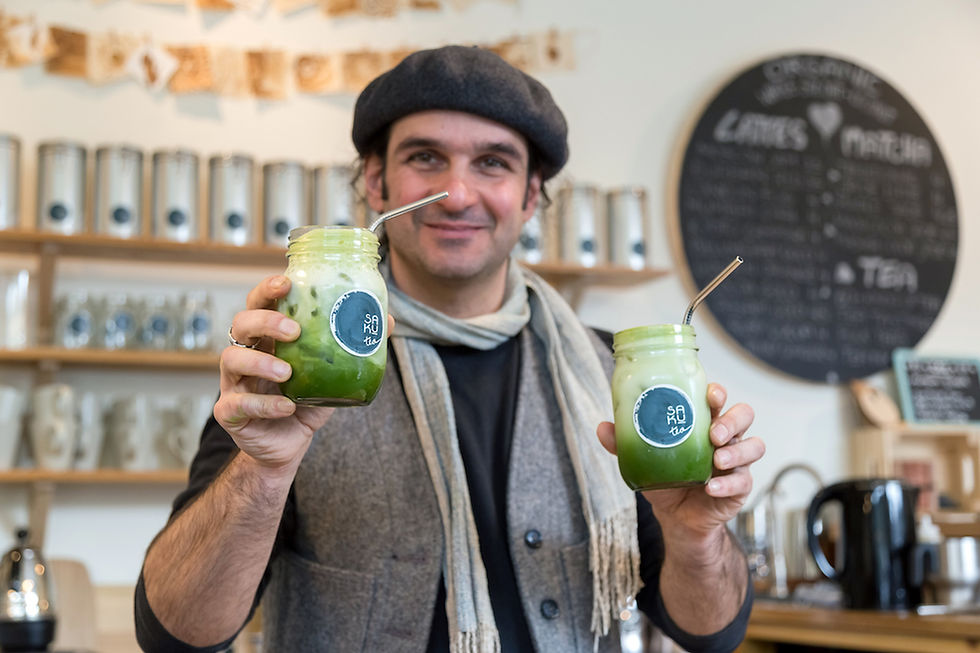
We love the beauty of matcha: its emerald color, luminous presence, and clarity. The way it feels in the body — calm, vital, alert. We are fascinated by its history and its connection to ceremony and spirituality. These are things we cherish deeply.
Today, when branding and money often speak louder than understanding — when “matcha spots” appear everywhere, often disconnected from tea’s origins, cultural depth, and agricultural truth, we’ve chosen a different path. A quieter, deeper one, rooted in craft, care, and connection.
THE MATCHA CRISIS
This isn’t just a matcha shortage.
Behind the scenes, the bottlenecks and delays are far more complex, the result of multiple compounding factors that continue to converge. In June we went on a dizzying trip through Japan to meet with almost all of our suppliers in person. Our goal was to gain a firsthand understanding of what is actually happening.
Exploding Global Demand
Demand for matcha has exploded, especially for the good stuff: bright green, high-quality, first-flush, stone-ground. What was once niche has gone fully mainstream, fueled by wellness culture, social media, and the global café boom. Every part of the matcha ecosystem is now under strain: farming, processing, milling, packaging, and shipping are all being pushed to their limits.
The Farming Challenge
On the production side, the number of skilled tea farmers in Japan continues to decline. The population is aging, and many younger people are leaving rural areas to seek opportunities in the cities. Matcha-making requires extraordinary care, experience, and a great deal of skilled labor.
The Limits of Stone Milling
Despite soaring demand, traditional stone milling remains a slow and precise process. Most mills produce only 30 to 40 grams per hour. Scaling this without sacrificing quality is a serious challenge. And once the matcha is milled, packaging brings its own bottleneck, requiring time, equipment, and additional skilled labor.
Industry Hesitation
There is also hesitation within the industry. Many producers are wary of expanding too quickly. Climate conditions are becoming more erratic. Skilled workers are scarce. And the culture around matcha is shifting, sometimes in ways that feel more extractive than respectful. The question many producers are asking before making major investments is: Is this a passing boom, or will demand continue to grow?
Our Perspective
At MiSA, we believe matcha is here to stay. But that does not mean appreciation cannot evolve and deepen. We see it every day: people come in for matcha lattes, then discover we offer many types of matcha, each with its own terroir, cultivar, and flavor profile. Over time, they begin exploring traditionally prepared matcha, or dive into other tea traditions such as Chinese gong fu cha, where extraordinary oolongs and black or green teas from Taiwan or China completely blow their minds, reshaping their understanding of what tea can be.
Because matcha is tea, not something separate, but part of a vast, living tradition.
However things develop, now is the time to pause, reflect, and protect the integrity of this centuries-old craft. We can all continue to enjoy glorious matcha, but consciously and conscientiously.
young tea leaves ready for harvest peek a boo sonogi tea fields honzu traditional shading in uji shaded and unshaded rows harvested and pruned tea fields kagoshima... can you see the volcano? direct shading requires timing and skill fresh sea air makes tea happy
THE MATCHA ECOSYSTEM
Matcha production is incredibly complex and labor-intensive. It involves soil expertise, seasonal timing, shading, steaming, drying, sorting, resting, blending, milling and packaging. There are three general systems in matcha production:
The Integrated Artisan
When one master producer controls the entire cycle, the result is matcha of remarkable character and purity. These teas often reflect not only the land and cultivar, but also the vision and craftsmanship of the artisan behind them.
This is the story of some of the finest, most exclusive matcha you’ll ever taste. Like our Ujihikari & Samidori single-field, single-varietal matcha powders — or our Karakuni Matcha.
The Farmer–Wholesaler Model
In Japan, matcha often follows a traditional path from farm to cup. Farmers focus on growing and harvesting the tea plants and sometimes also make aracha—an early stage of tea that is still unrefined and unsorted.
From there, the work is passed on to the tonyasan, or wholesaler. The tonyasan refines, mills and blends the tea to create a finished matcha with a consistent flavor and character.
This is the model behind our MiSA Matcha & Wazuka Matcha. In these cases, the wholesaler may source leaves from one farmer or several, then combine them into their own signature style. This way, farmers can dedicate themselves to cultivating exceptional tea while the wholesaler takes care of everything else, including branding, marketing and bringing the matcha to tea drinkers.
The Auction System
In this model, farmers cultivate, harvest & process their leaves into aracha or tencha, which are then sold at auction. Wholesalers purchase the teas they need, refine and blend them into their own house styles, mill them fresh and bring them to market.
This system also gives farmers more autonomy to grow and process tea according to their own methods, while leaving the final steps of blending, milling, branding and distribution to the wholesalers.
Our Kinomi Matcha follows this path, reflecting the balance between farmer independence and the wholesaler’s craft.

2025: AN EXCEPTIONAL HARVEST & RISING PRICES
This year’s harvest is truly exceptional. A cool, steady spring gave us matcha with incredible flavor and complexity. The yield, however, was lower, and when you combine that with crazy global demand, prices naturally rise — a lot!
In fact, at this year’s tea auctions in Kyoto, most prices more than doubled, in some cases surging around 180% compared to last year. Even longtime Japanese wholesalers were caught off guard — many unsure how to sustain their businesses. After all, they still have to sell to businesses like MiSA … and if prices climb too high, who can realistically afford it in the end?
This is a challenging moment for everyone in the supply chain. There may be more surprises, price adjustments and occasionally empty shelves in the future. It will take patience, understanding, a good measure of creativity and flexibility for all of us to navigate what’s happening and what is ahead, but we believe we will find a way.

MATCHA IS HERE TO STAY
What keeps people coming back to matcha isn’t just the hype. It’s the feeling. A calm, long-lasting caffeine lift that is gentler on the stomach than coffee. The mindful ritual. The rich, velvety texture. And of course, the deliciously earthy, umami taste. Add to that the dense concentration of nutrients and antioxidants that brighten your eyes and make you feel alive. Matcha deserves all the attention it is getting.
In Japan, opinions vary. Some producers are content with how things are. Others long for the old days. Some see opportunity in the Western demand for matcha, expanding and buying land, converting sencha fields into tencha for matcha, hiring workers and embracing the change. It is all part of a natural response to growth.
We asked our MiSA Matcha supplier — a 67 year-old legend in the tea world — what he thinks about using first-harvest, stone-milled matcha in lattes. He thought for a moment, then said, “It’s okay. If people enjoy matcha this way, it’s still matcha. They still get the benefits.”
But then he giggled and added with a smile: “Matcha latte is like a children’s drink — like hot chocolate! My grandma used to make it for me when I was a young boy, using only a little matcha & a bit of sugar.”
We hadn’t thought of it that way, but it made us smile.

love,

All photos & text copyright © 2025 MiSA tea OG.


